Engineering Context: This article is not directly about the Project GVM vehicle weight calculator, but it comes from the exact same design philosophy: be thorough, understand the load path, and improve weak points rather than accept a solution just because it is common. That same approach sits behind the calculator itself, which models vehicle loads in more detail than a simple total-weight estimate.
The Problem
The Project GVM 200 Series required a rooftop tent. On the 200 Series, the common solution is a backbone-style continuous rail system supporting either a platform or load bars.
Our priority, however, was quick and easy tent removal. We wanted a setup that left the roof low-profile and tidy when the tent was off, both for long-distance touring without camping gear and for more technical 4WD trips where unnecessary height and mass are worth avoiding.
The main options considered were:
- Backbone with platform: excellent roof rating, but with unwanted platform weight.
- Backbone with load bars: strong and proven, but still visually intrusive once the tent is removed.
- Rhino-Rack RCP roof mount kit: adequate 150kg roof rating and a much smaller footprint when removed.
The Rhino-Rack RCP mounts were preferred, as they provided sufficient load capacity for the rooftop tent while maintaining a low-profile configuration when the system is removed. The parts used to create the six-mount configuration are shown below.
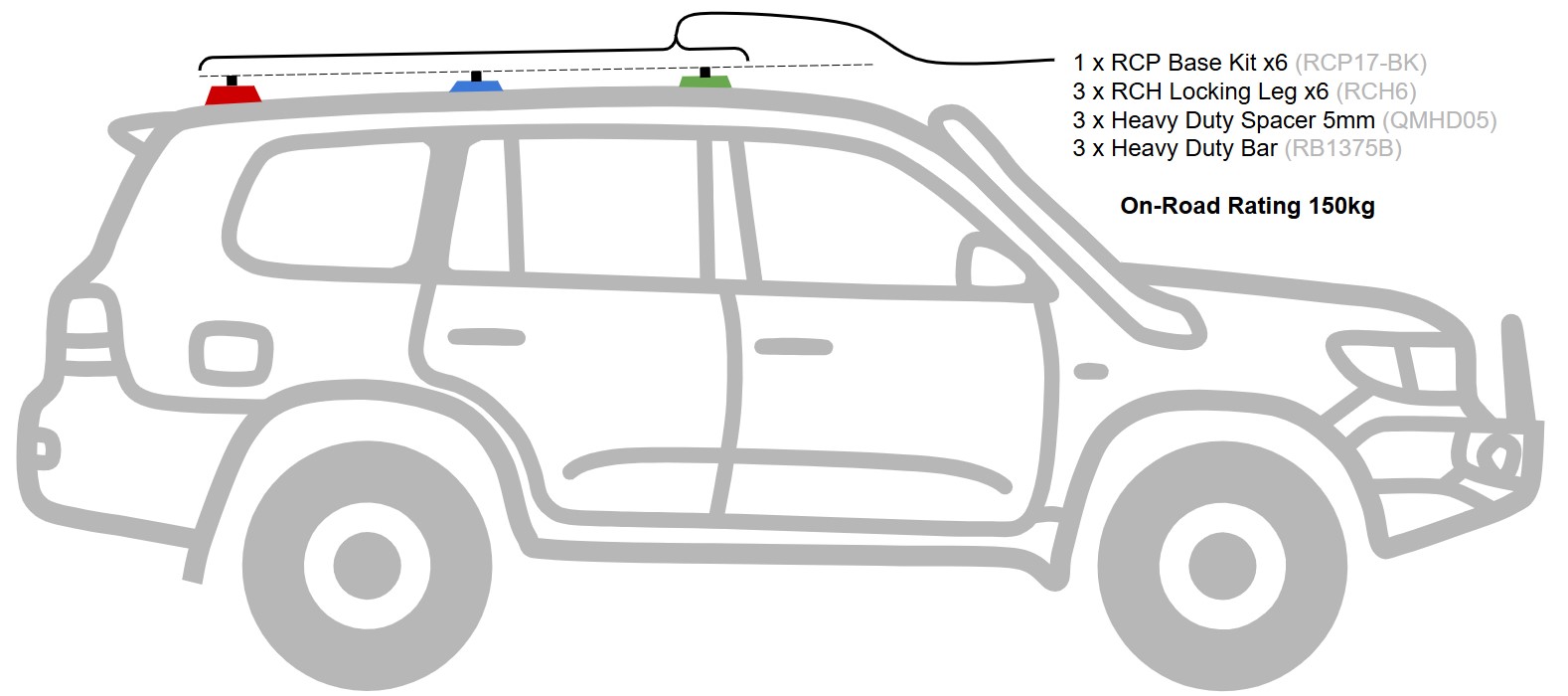
The limitation of the standard RCP kit is that it uses only six of the eight factory roof mounting points. It also creates more front overhang than we were comfortable with once a rooftop tent is fitted.
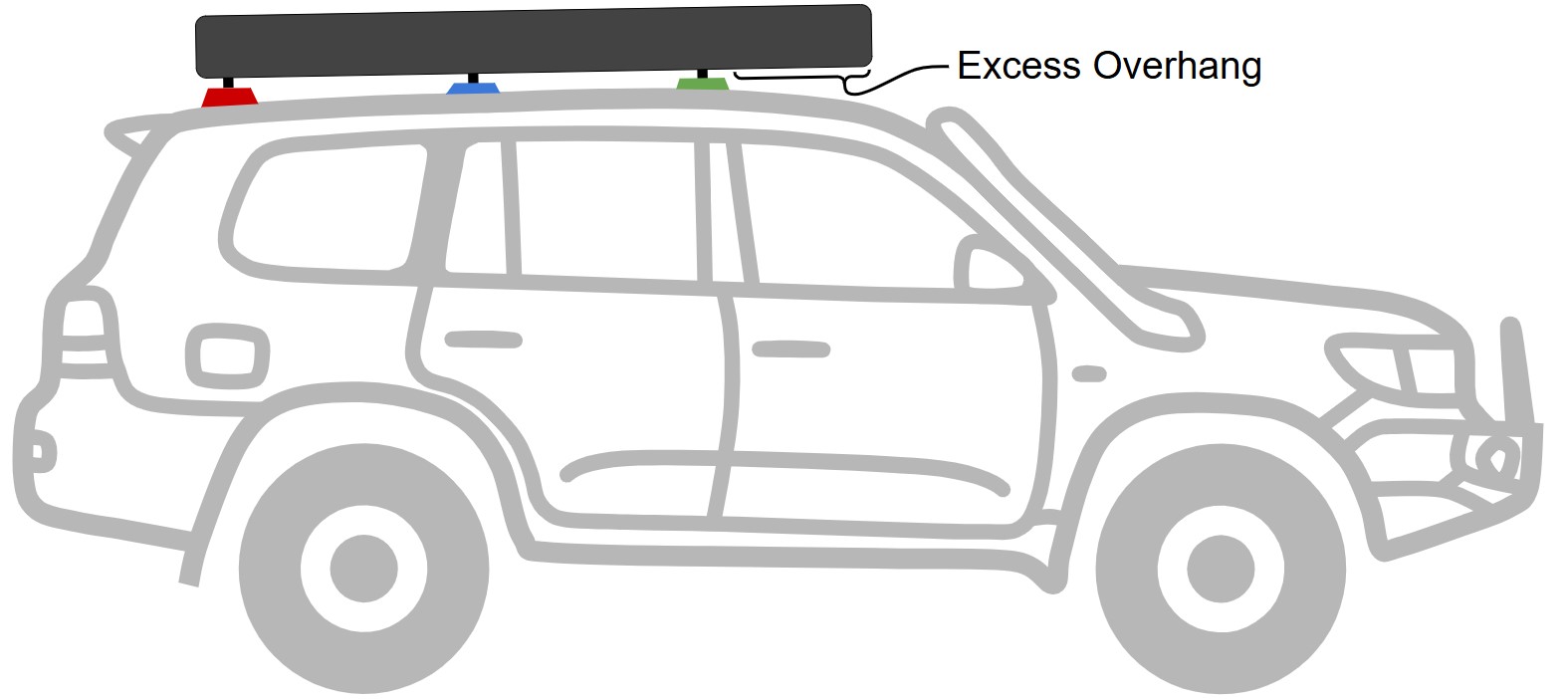
The standard kit was close, but not ideal. As with the Project GVM vehicle weight calculator, the goal was not to do things by halves. If there was a better engineering outcome available using existing parts, it was worth finding.
The Solution
Research on this configuration was surprisingly limited. After digging through older references, we found evidence of a Rhino-Rack arrangement that used two sets of the rear mounts. A similar combination had also appeared in a now-discontinued package from a roof rack supplier.
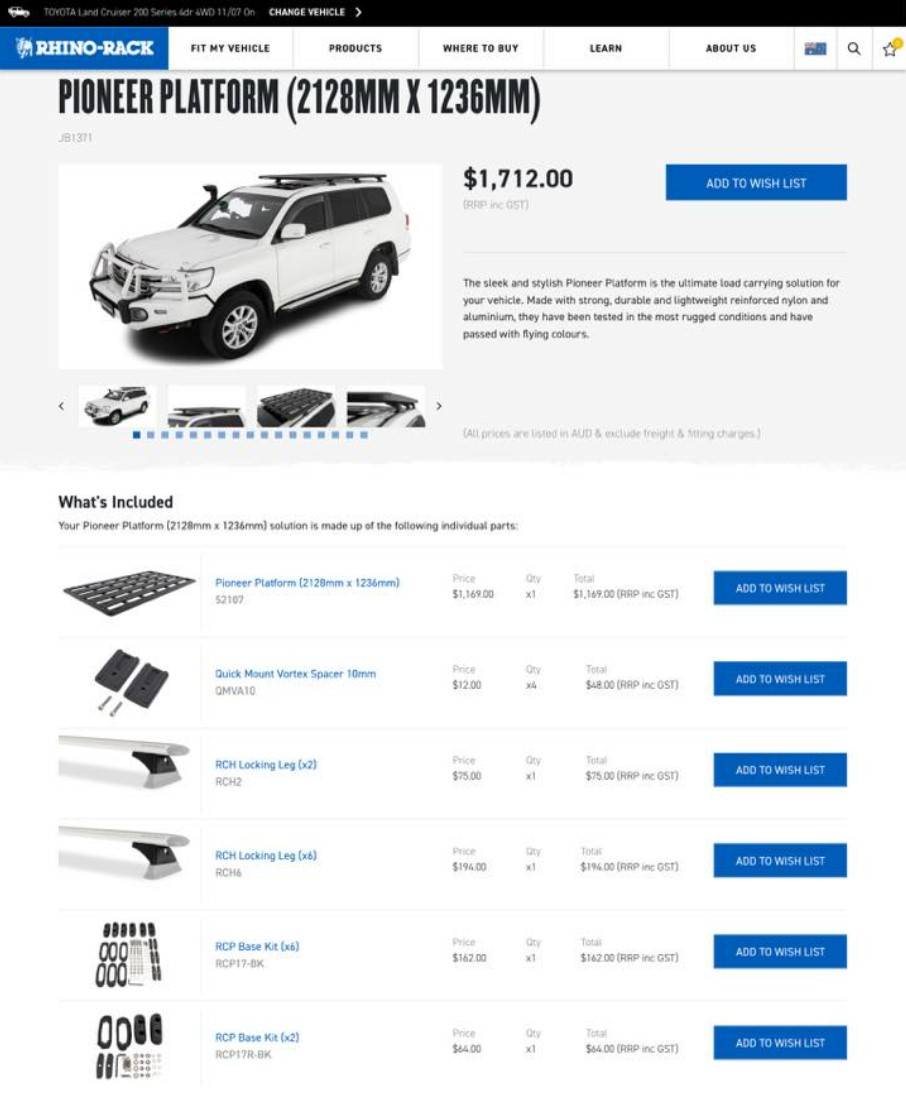
With the three rear mounts installed, a straight edge was used to check alignment. This confirmed that a rear mount placed in the forward position maintained the correct angle relative to the other bases. The only issue was that it sat approximately 5mm lower.
Rhino-Rack offers off-the-shelf spacers up to 20mm, so correcting the 5mm height difference was straightforward. No custom fabrication was required. The additional parts used to create the eight-mount configuration are shown below.
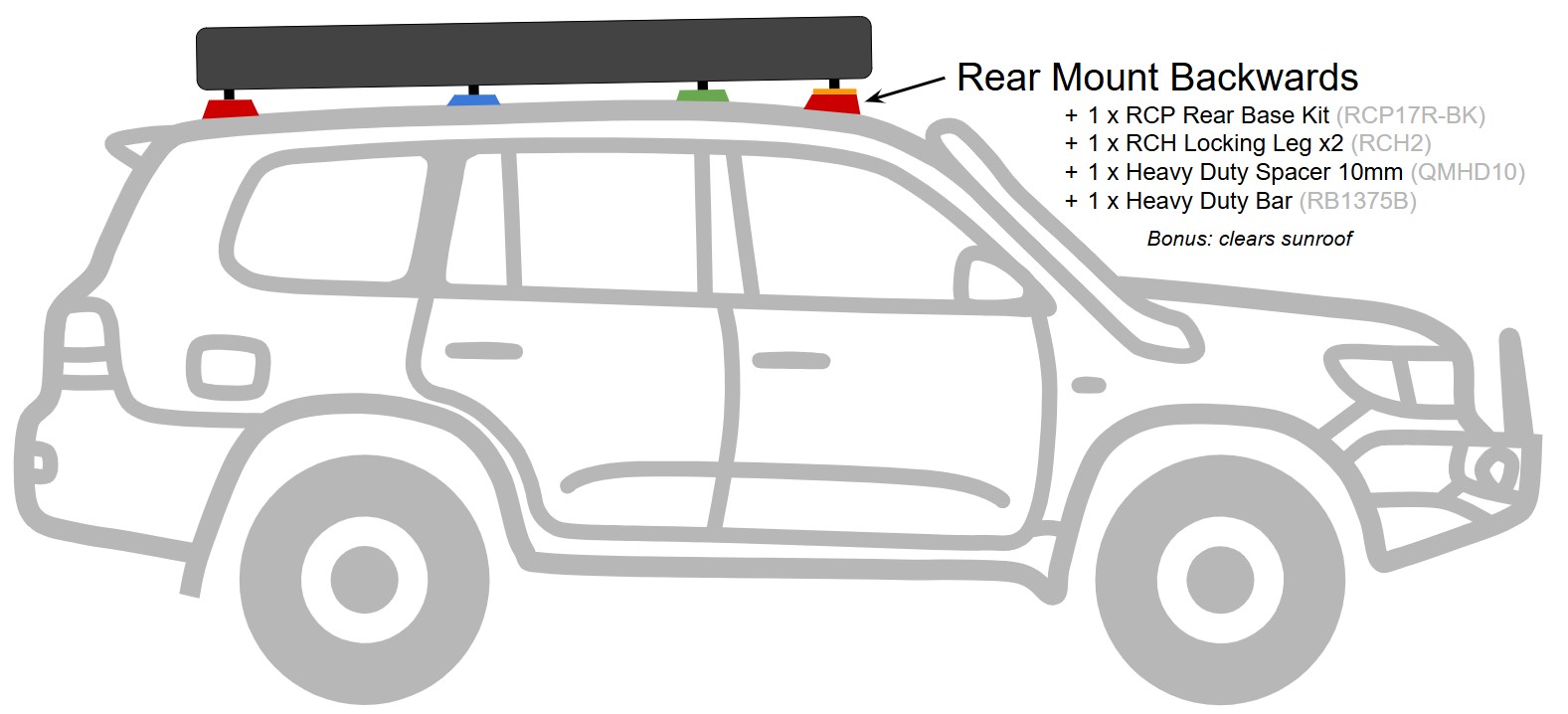
Importantly, this does not formally increase Rhino-Rack’s published 150kg roof rating. What it does do is distribute the load across all eight factory mounting points rather than six, reducing the load carried by each individual mounting location and improving overall support.

Rhino-Rack’s standard leg option for the 200 Series is the RCH leg at 52mm height. Because the Project GVM vehicle does not have a roof-mounted aerial, we used the RCL leg at 37mm height instead, reducing the installed height by 15mm.
Again, this does not formally change the roof rating. It does, however, reduce the installed height of the load, which is beneficial from both a dynamics and aerodynamic perspective. It also gives a lower-profile result than a backbone system using the same load bars, while remaining compatible with Pioneer Platforms if required.
Final Result
The final configuration is shown below: eight RCP bases installed, heavy-duty load bars fitted, and the rooftop tent mounted.
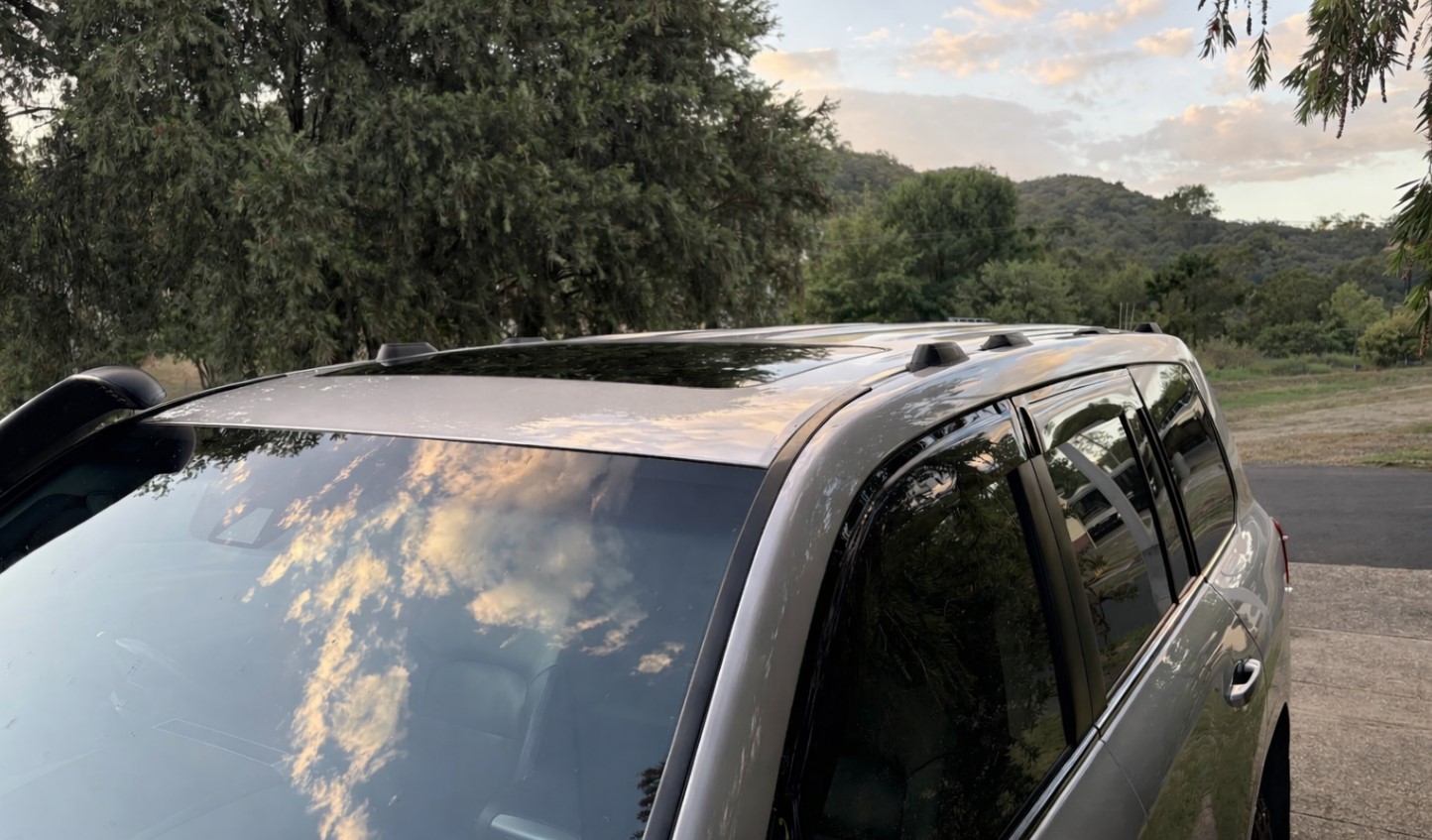
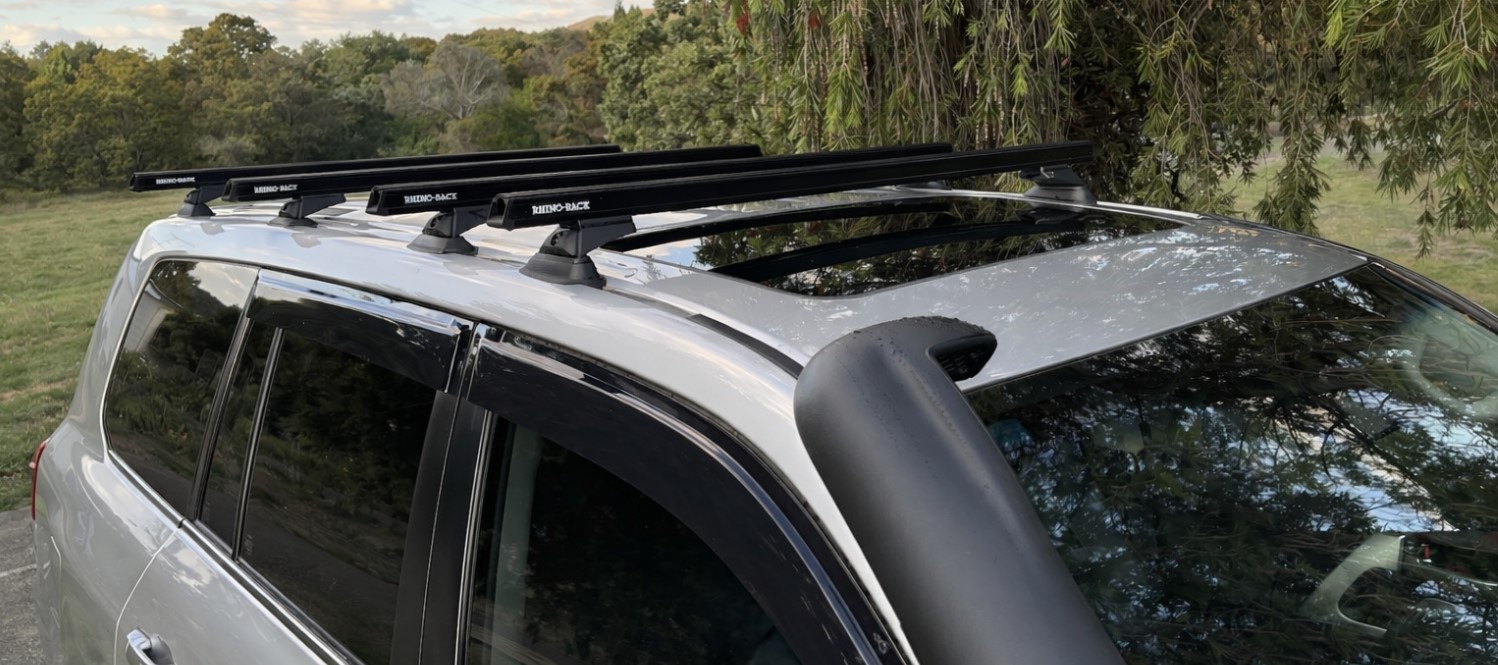

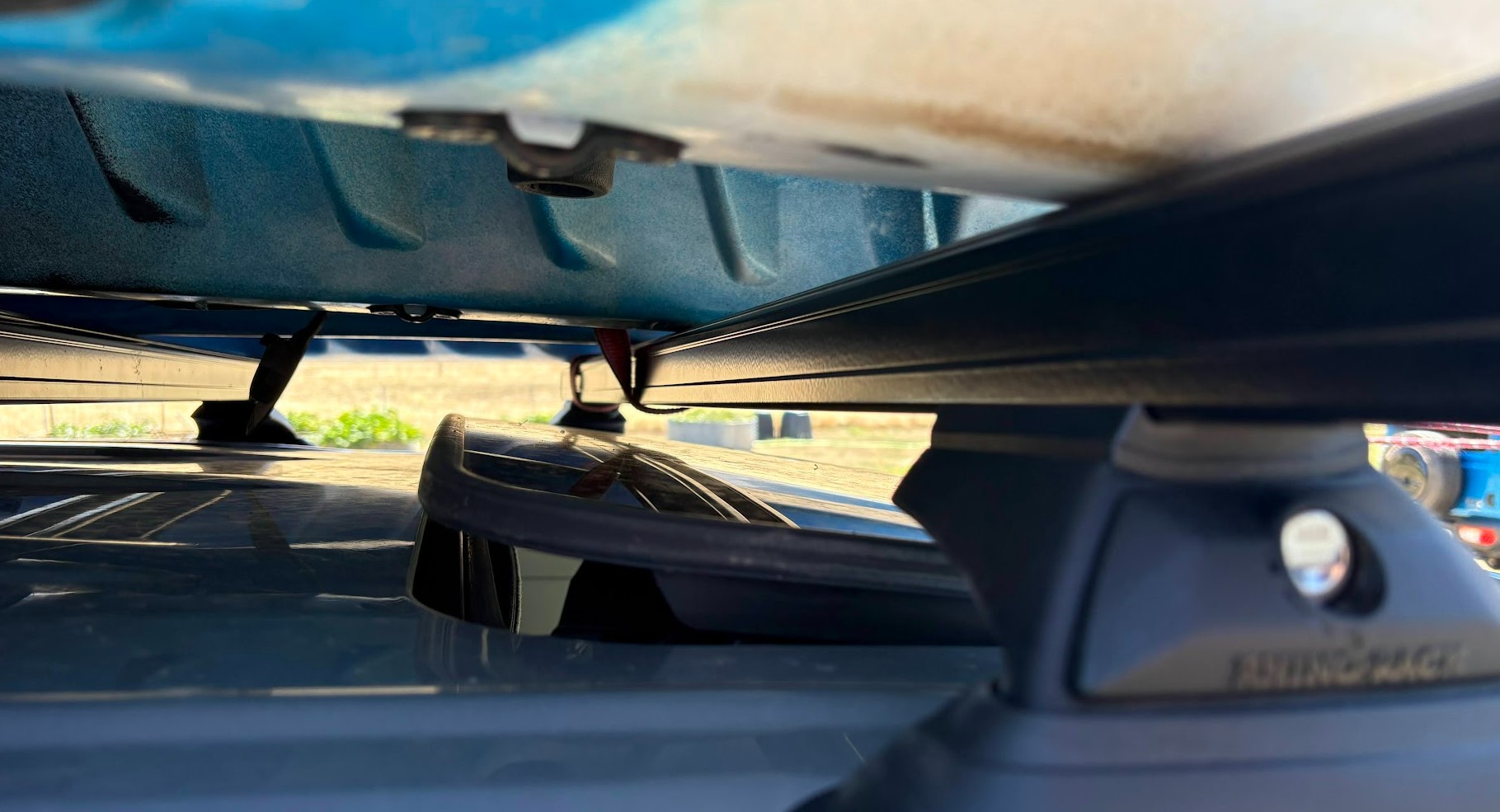
The front bar still allows enough clearance for the sunroof to open, which was an important packaging check.
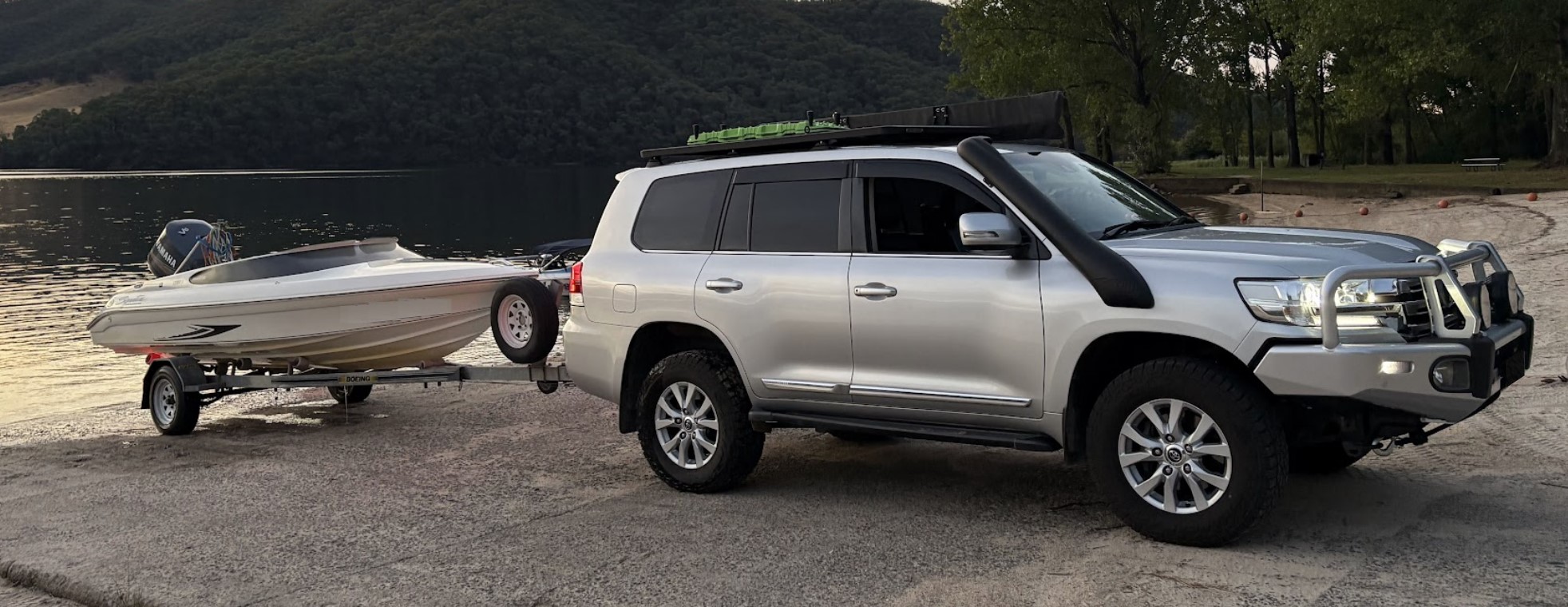
If a rooftop tent is not being used, a Pioneer Platform on the RCL legs gives a very low-profile setup, lower again than a backbone arrangement. This was the Project GVM configuration before the rooftop tent arrived.
Installation Notes
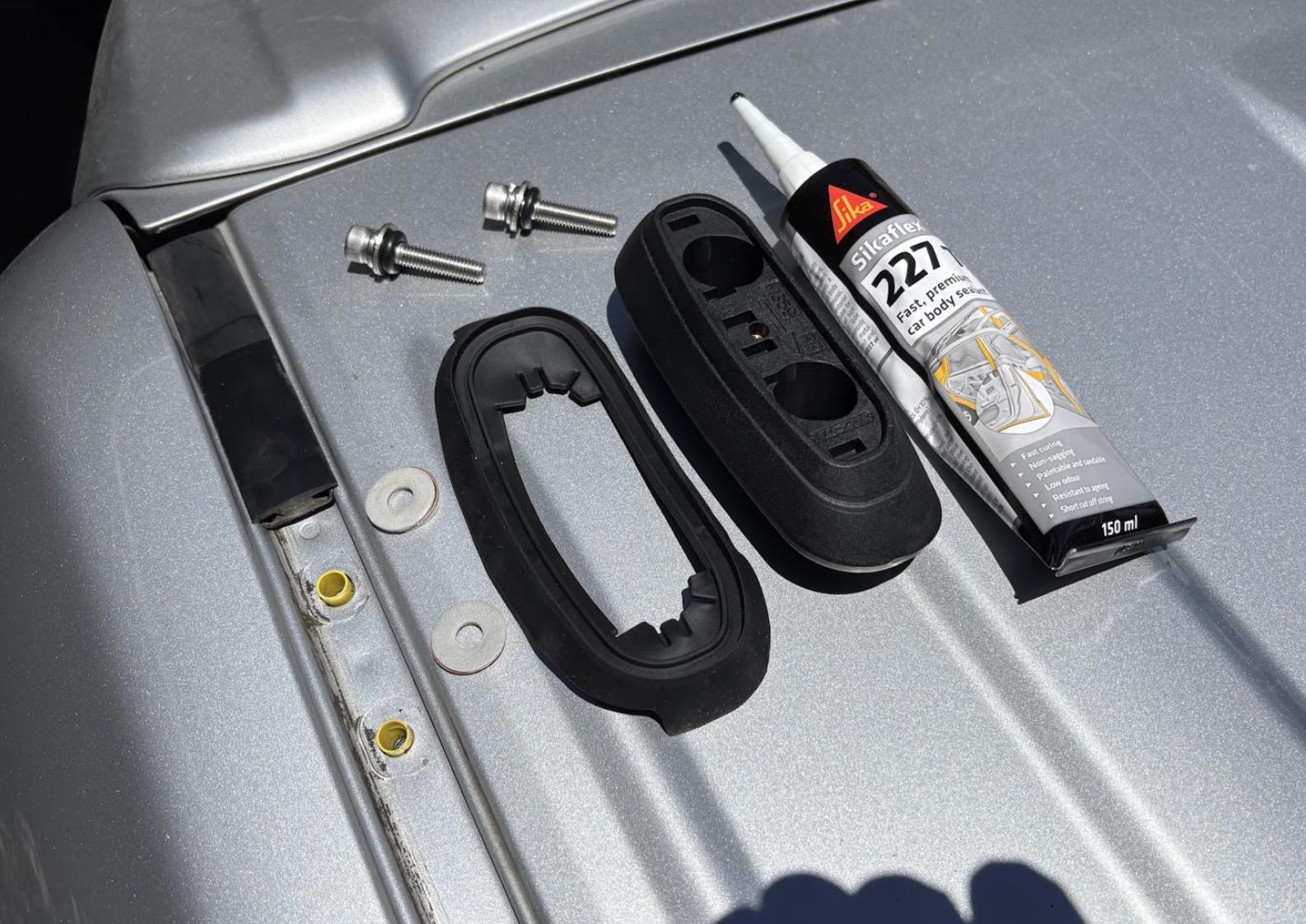
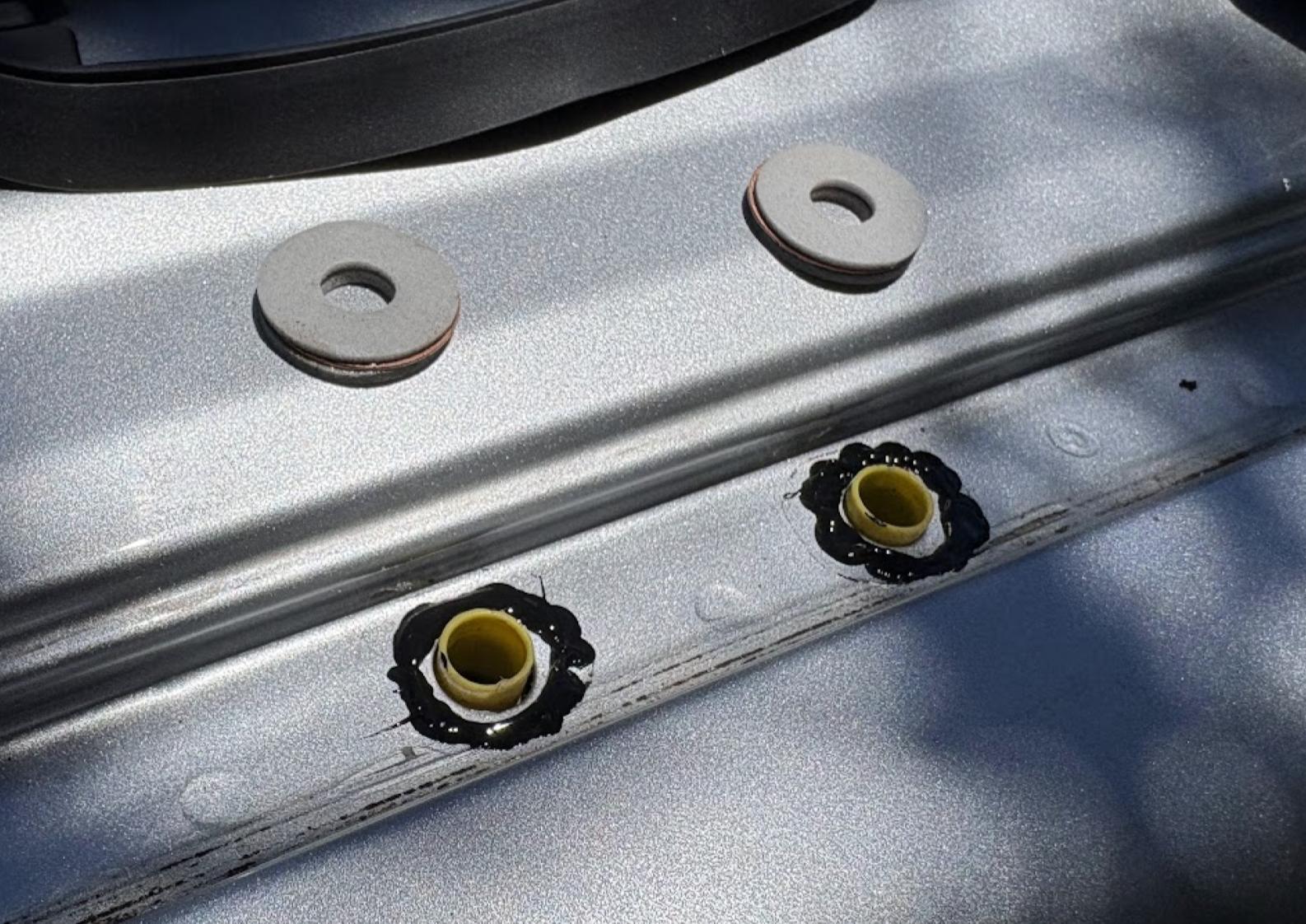
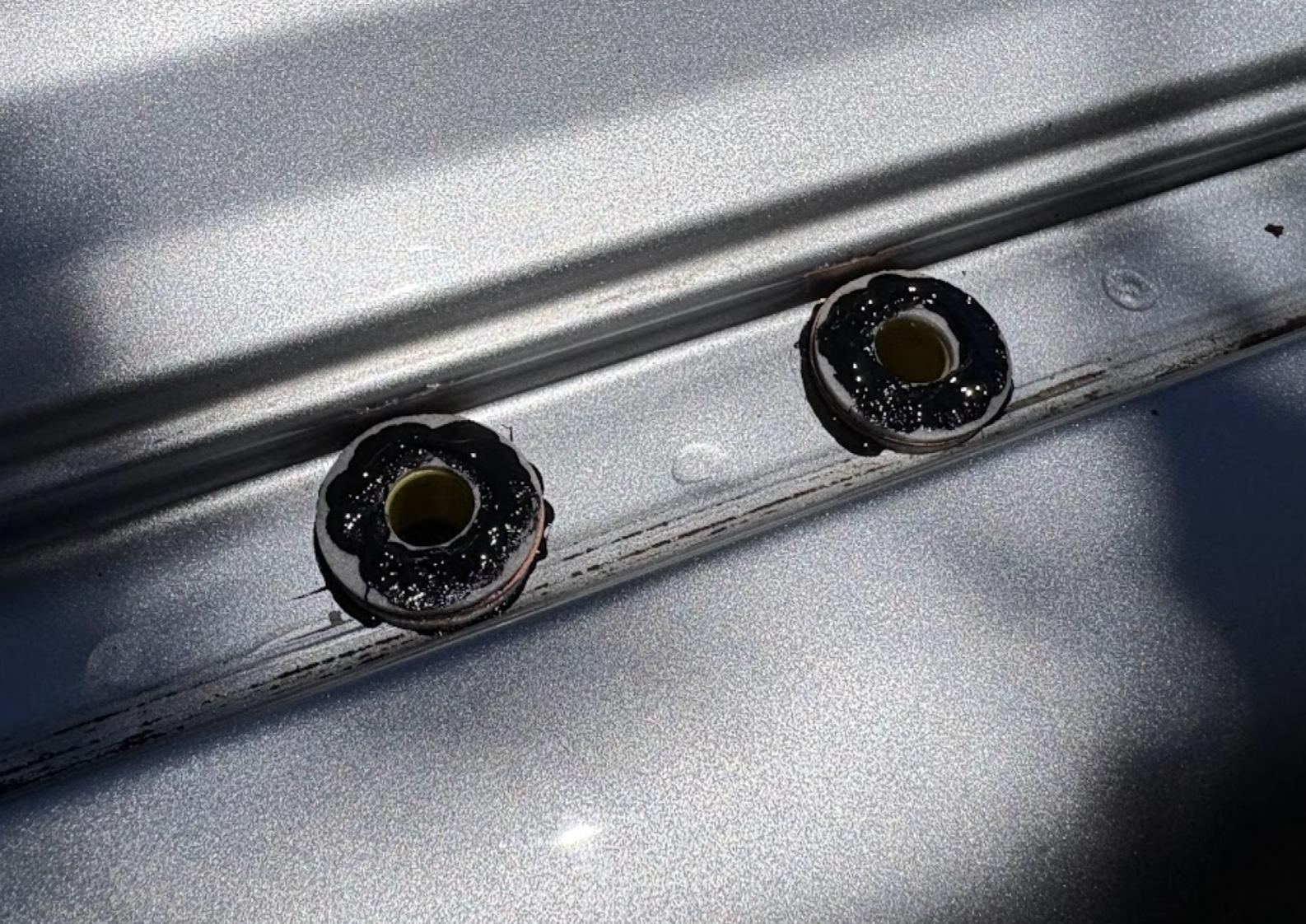
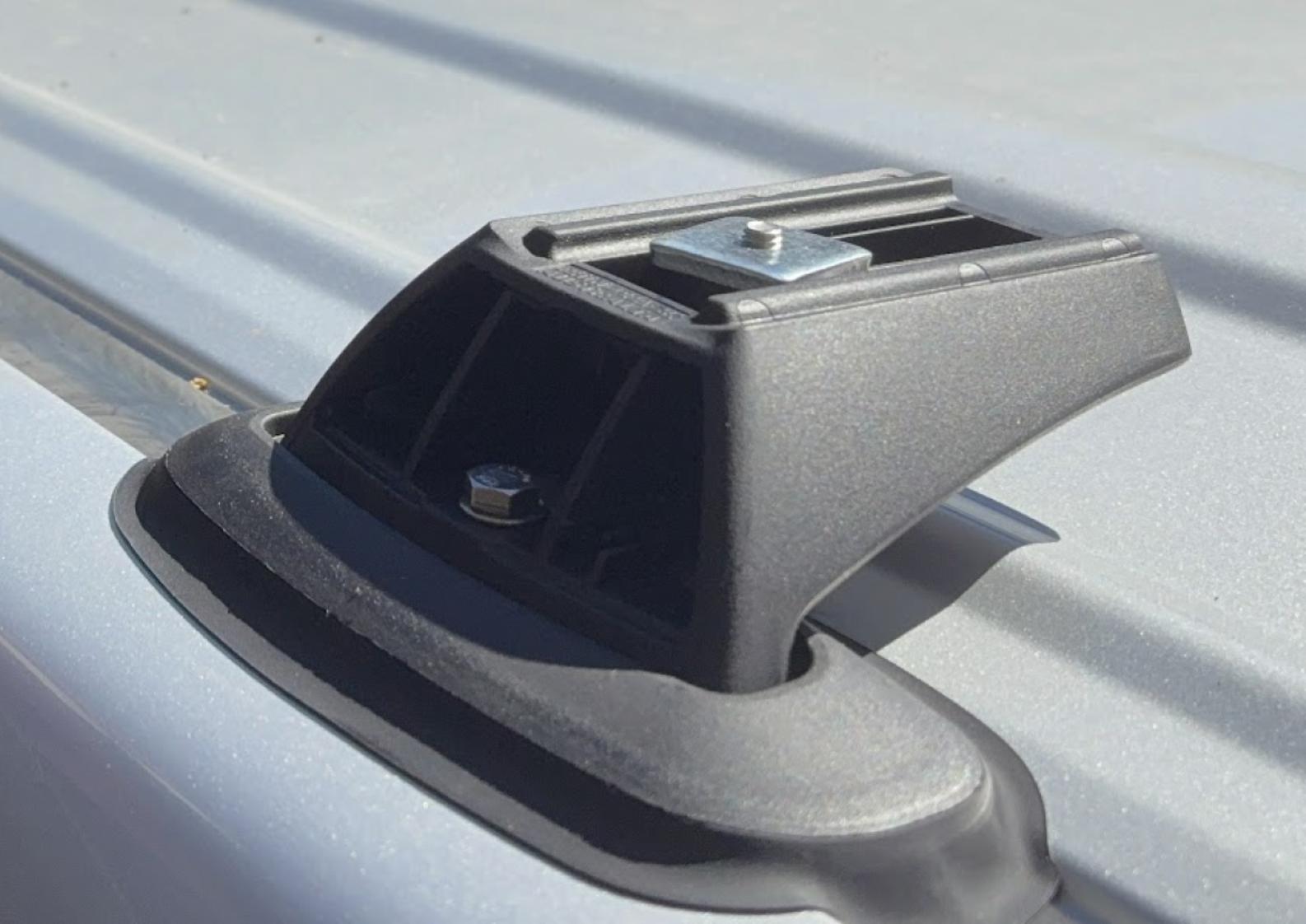
For anyone replicating the setup, the images below show the additional base installation detail. As with any roof-mounted load system, sealing, washer installation, and final alignment all matter.
Summary
This was a simple but worthwhile refinement: use all eight available roof mounting points, correct the small height mismatch with standard spacers, keep the assembly lower with RCL legs, and end up with a cleaner and better-supported result.
It is the same mindset behind the Project GVM vehicle weight calculator: understand how the loads are actually carried, then make decisions based on the real mechanics rather than assumptions. For a deeper look at that approach, see how the calculator works.