If you are modifying a 4WD for touring, towing, or work, you have probably heard the term GVM thrown around in forums, Facebook groups, and workshops. But what does it actually mean, and why is everyone so obsessed with it?
This guide breaks down the acronyms, the laws, and the physics to help you understand exactly what your vehicle can (and can't) carry.
What is GVM?
GVM stands for Gross Vehicle Mass.
Simply put, it is the maximum legal weight your vehicle can weigh at its own wheels if the vehicle drove onto a scale. This is a limit set by the manufacturer (e.g., Toyota, Ford, Isuzu) and registered with the government.
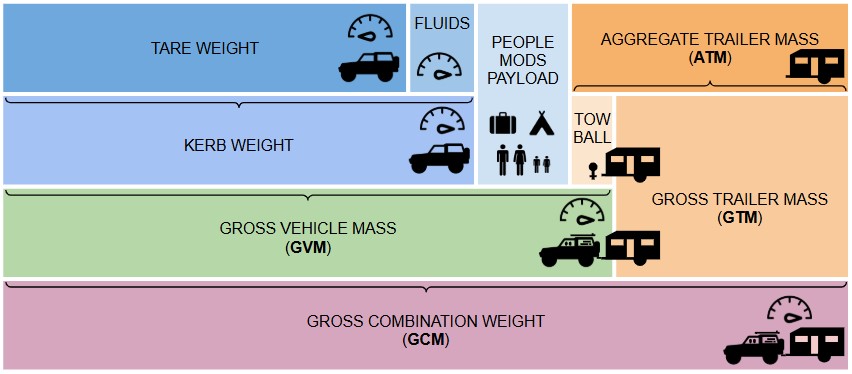
Your GVM includes everything:
- The vehicle itself (chassis, body, engine, fluids)
- All accessories (bullbar, winch, roof rack, lights)
- Passengers (including the driver!)
- Cargo (fridges, drawers, camping gear, tools)
- Fuel (a full tank adds substantial weight)
- Tow Ball Down Weight (if you are towing)
Gravity: It All Adds Up
There is a lot of talk about 'GVM', but why do we need to worry about it in a well-designed modern car?
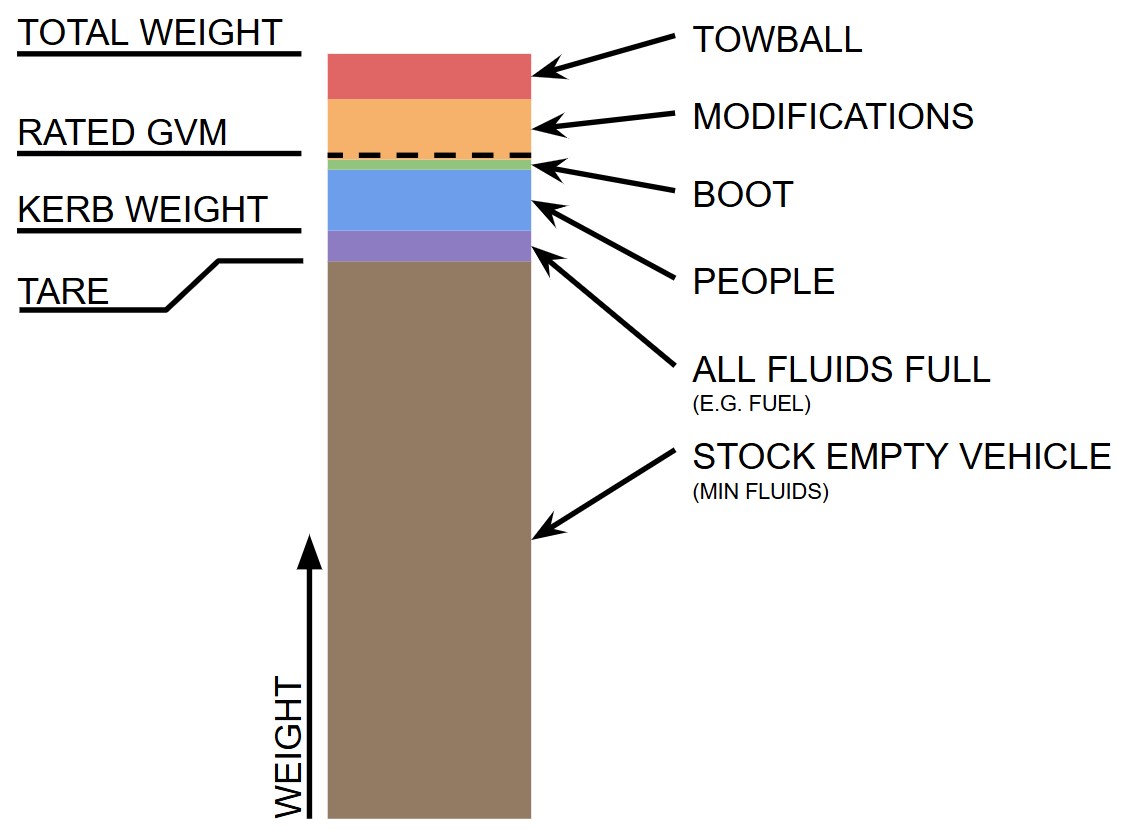
Generally speaking, vehicle manufacturing is a game of compromise. Vehicles are designed to carry passengers, a full tank of fuel, and your groceries. The manufacturer could have made the vehicle suspension, axles, chassis etc stiffer or stronger to have a higher GVM, but that would only add to the cost and make the vehicle ride harsh. In stock form, driving out of the dealership, your weight is well within safe limits.
However, Australian conditions are harsh. We often have no choice but to add steel protection (bullbars, scrub rails). Once you start setting up for touring, the added weight of accessories and gear inevitably puts the vehicle over its GVM, even with the same number of passengers.
The Hidden Limits: GCM & Axle Loads
Being under your GVM is step one. But there are two other limits that catch people out.
1. Axle Load Limits
Your GVM is spread across two points: the front axle and the rear axle. Each axle has its own maximum weight limit.
- Front Axle Limit: Determined by suspension, steering components, and chassis strength.
- Rear Axle Limit: Usually higher than the front to account for loads in the boot/tray and towball.
Crucial Point: You can be under your total GVM but over an axle limit, particularly the front axle when you add a bullbar and winch. Generally you can tell simply by looking at a vehicle that looks nose heavy, the suspension is not in its designed point. There would be reduced suspension travel, and handling will be different. More dangerous is an overloaded rear axle, which generally means weight behind the rear axle is creating a leverage effect, where the front axle is being lifted which can make the vehicle harder to steer safely.
2. GCM (Gross Combination Mass)
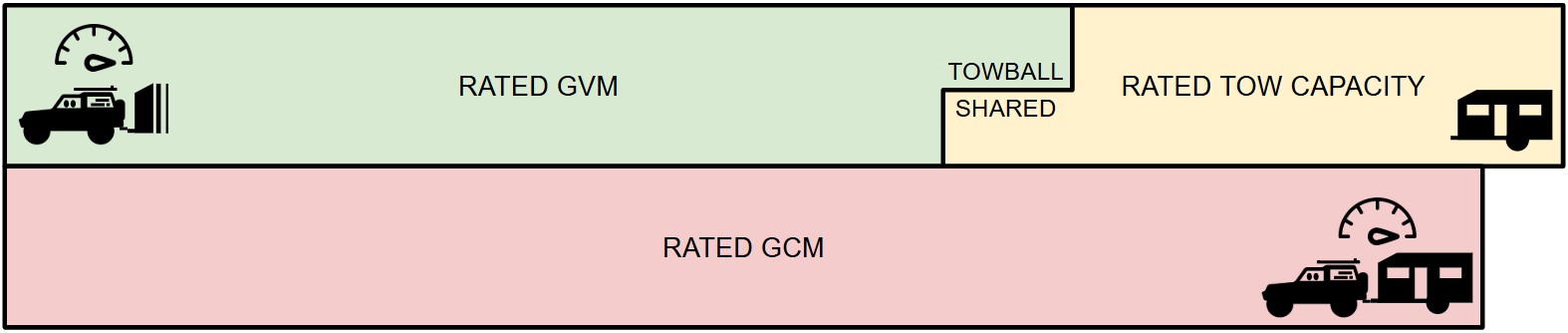
If you are towing, GCM is the total allowed weight of your Car + Trailer.
Many people assume if their car can tow 3,500kg, they can tow that amount while the car is fully loaded.
In reality, most utes must be almost empty to legally tow their maximum 3.5-tonne rating. As you add weight to the car, you must reduce the weight of the trailer to stay under the GCM.
What happens if I exceed GVM?
Driving an overloaded vehicle has serious consequences:
- Mechanical Failure: You risk cracking your chassis, blowing tyres, or failing suspension components in remote areas.
- Safety & Handling: Overloaded vehicles have longer braking distances, increased body roll, and are prone to overheating.
- 4WD Ability: Your capable 4WD no longer has the same travel and flex, and will often bottom out on the bump stops shock loading the chassis and axle.
- Insurance Denial: If you are involved in an accident, an insurance assessor may weigh your vehicle. If you are over GVM, your policy is likely void, leaving you liable for all costs.
- Legal Penalties: Transport authorities (like RMS, VicRoads, TMR) and Police have mobile scales. Fines are hefty and you may be grounded until the weight is removed.
What is a GVM Upgrade?
If you simply have too much gear for your factory GVM, you can look into a GVM Upgrade.
This involves fitting heavy-duty suspension and getting an engineering certificate (compliance plate) that legally raises your GVM limit.
- Pre-Registration (SSM): Done on a brand new car before it gets number plates. This is federally approved and easiest for resale.
- Post-Registration: Done on a car you already own. This requires a state-level engineer sign-off and is specific to the state the vehicle is registered in.
Note: A GVM upgrade increases what the car can carry, but it rarely increases what the car can tow (GCM).
Summary
Understanding GVM isn't just about avoiding a ticket—it's about understanding the limits of your machine. A vehicle that is built within its weight limits will be more capable off-road, more comfortable on the highway, and will get you home safely.
Want to check your numbers? Use our free calculator to see exactly where you stand.